10 Questions with Qingshan Yang
Our PhDs are playing a significant role within our program, and in the broader industry.
Qingshan is a PhD student in materials engineering at University of Southern Queensland. Before commencing his PhD, he completed his master’s degree at Wuhan University of Technology, China, which focused on flame-retardant polymers.
Driven by low CO2 emission targets and the need for lightweighting of structural materials, his PhD research focuses on the development of high-performance flame-retardant and recyclable epoxy thermosets and their composites. The research aims to provide a viable pathway toward circular economy principles and the advancement of sustainable high-performance composites.
Q1. Under which ACM CRC Research Program does your PhD project sit?
My PhD project falls under the RP1 High Performance Composite Materials (80%) and RP2 Manufacturing Processes (20%).
Q2. What is the focus of your PhD?
My PhD focuses on the development of high-performance flame-retardant and recyclable epoxy composites.
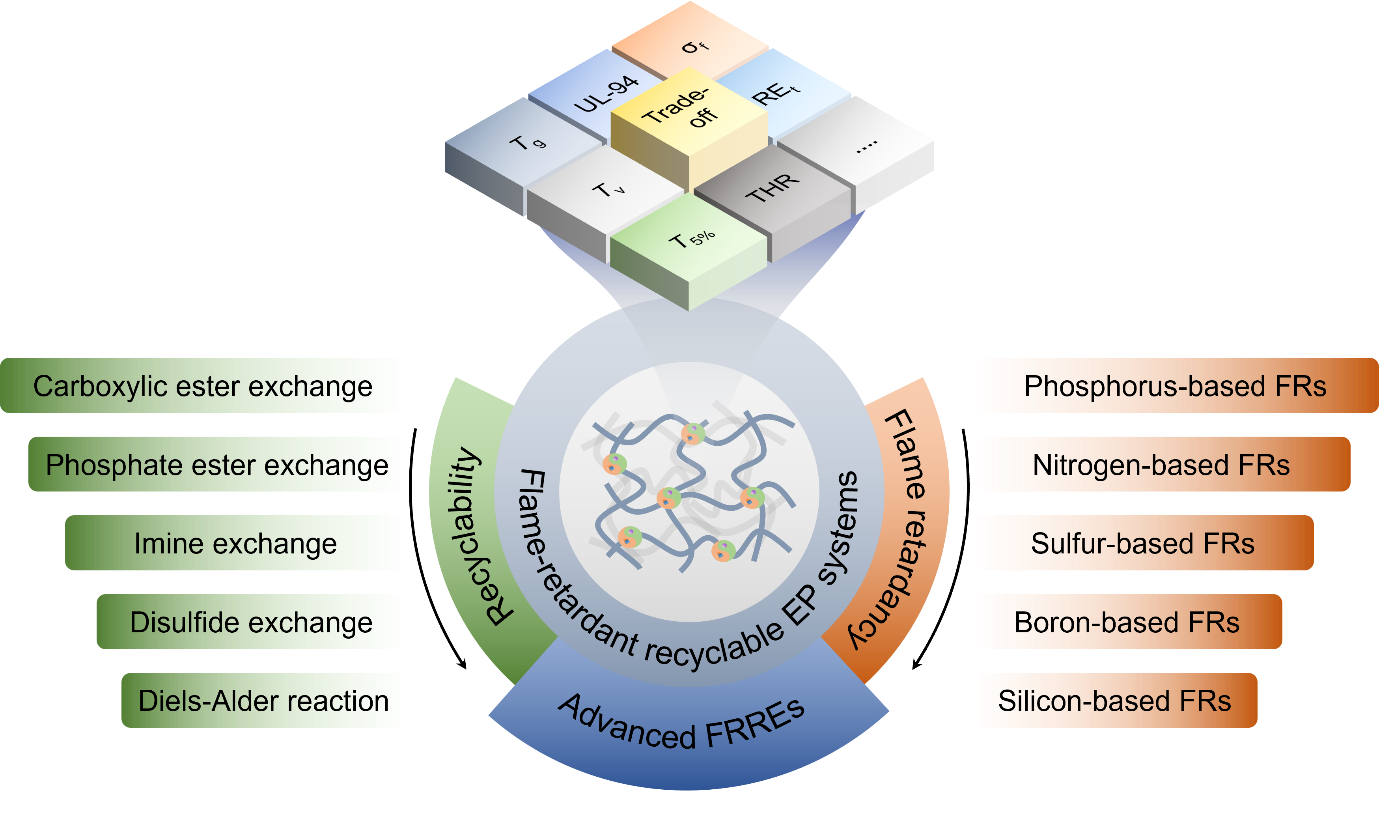
Specifically, this project aims to address the inherent flammability and poor recyclability of conventional epoxy resins and their composites through the incorporation of dynamic covalent bonds and flame-retardant groups into epoxy cross-linked networks. This approach enables the development of flame-retardant and recyclable carbon fibre-reinforced polymer composites while maintaining high in-service performance. The research ultimately seeks to support sustainable development and advance circular economy strategies for high-performance composite materials.
Q3. When did you become interested in this field?
My interest in this field gradually developed during my master’s studies, when I began researching flame-retardant polymers to improve their fire safety.
With the increasing demand for low-carbon technologies and lightweight structural materials, I became particularly interested in the development of high-performance, flame-retardant, and recyclable epoxy thermosets and their composites.
I believe these materials offer significant potential for expanding the applications of epoxy-based composites while enabling the recycling and reuse of end-of-life products, thereby supporting sustainable development and circular economy strategies.
Q4. What made you interested in it?
As one of the three general-purpose thermosetting engineering plastics, epoxy resin (EP) is often used as matrix materials for carbon fiber-reinforced polymer composites (CFRPs). However, the inherent flammability and non-recyclability of conventional epoxy materials pose great challenges to potential fire risk and end-of-life carbon fiber recycling. Specifically, traditional epoxy resin has certain fire hazards due to its high flammability, and the emission of plenty of toxic/asphyxiating gases during combustion causes environmental pollution as well as shortens the fire rescue time dramatically. In addition, the stable crosslinked structure of epoxy networks makes them difficult to degrade and recycle.
With the growing demand for CFRPs, it is inevitable that the amount of waste generated, including unused prepregs, off-cuts generated during manufacturing, and end-of-life CFRPs. It is expected that by 2025, global CFRPs waste will increase to 20,000 tons per year. Such substantial waste of CFRPs will cause serious environmental concerns and resource waste. Therefore, there is an urgent need to develop effective flame-retardant and recycling technologies to construct high-performance epoxy thermosets and their composites.
Q5. What do you hope to achieve through your PhD? What challenges are you hoping to solve?
Through my PhD, I hope to develop high-performance, flame-retardant, and recyclable epoxy thermosets and their composites with excellent mechanical robustness and long-term service performance.
The primary challenge I seek to address is the inherent trade-off between fire safety, recyclability, and in-service performance of dynamic polymers. By rationally incorporating dynamic covalent bonds and flame-retardant groups into epoxy networks, I aim to establish effective strategies for improving the flame retardancy and recyclability of epoxy composites while maintaining their in-service performance.
In addition, I hope to develop rigorous scientific thinking and strong problem-solving skills during my PhD studies, which will support my future research and career development.
Q6. What are your long-term goals/ambitions?
My long-term goal is to become a researcher in the field of sustainable polymers and advanced composites. I hope to contribute to the development of high-performance, flame-retardant, and recyclable thermosetting polymers that support circular economy and low-carbon technologies.
In the future, I would also like to bridge fundamental research with industrial applications, engage in international research collaborations, and contribute to the sustainable development of polymer and composite engineering.
Q7. What’s the best thing about being an ACM CRC PhD student?
The best thing about being an ACM CRC PhD student is the opportunity to closely integrate academic research with practical industrial applications and engage in industry-oriented research with real-world impact.
The program provides valuable collaboration opportunities between universities and industry partners, allowing me to better understand practical challenges in advanced composite manufacturing and sustainability. It has also helped me develop problem-solving, interdisciplinary collaboration, and teamwork skills, while strengthening my research capability and industry engagement experience.
Q8. What one piece of advice would you give to people thinking of undertaking a PhD in the composites manufacturing area?
My advice would be to stay curious, patient, and open to interdisciplinary learning. Research in composites manufacturing often involves challenges across materials science, chemistry, engineering, and industrial applications, making strong problem-solving skills, adaptability, and continuous learning essential for successful research outcomes.
Q9. Tell us something about you that would surprise/impress people.
I’m very interested in fitness, yet I negotiate with myself every time I need to go to the gym.
Q10. Anything to add?
What I find most rewarding is turning my own “big talk” into real accomplishments. This keeps us pushing ourselves, steadily moving forward, and enjoying the process along the way.
Interested to know more?
Visit our Education and Training page to learn more on our HDR Program, and how it’s helping to achieve industry transformation.